

How investors can get on board with sustainable travel and transport
Key points:
- International travel is returning to near pre-pandemic levels, highlighting the sustainability challenges for the sector
- Policymakers are taking decisive action to reduce emissions from transport while new technologies are popularising alternative methods of travel, and helping decarbonise existing ones
- The combination of new policies and technological innovation is creating a wave of long-term investment opportunities
International tourism is expected to return to almost pre-pandemic levels this year,
The answer, quite clearly, is decarbonising methods of transport and travel – but while the answer is simple, the process of getting there is not. However, this journey towards lower carbon travel is underway, and creating potential new opportunities for investors now and in the future.
From electric vehicles and sustainable aviation fuels to micro-scooters, we have seen a wave of innovation in the transportation sector over recent years, with new technologies popularising alternative methods of travel, and helping decarbonise existing ones.
Governments and policymakers are also taking drastic action in a bid to reduce emissions – France has banned short-haul flights where train alternatives exist,
But governments don’t want to put the brakes on international travel and tourism – a sector that contributed 7.6% to global GDP last year and created 22 million new jobs.
For many countries, attracting hordes of foreign tourists is vital to their economy.
However, travel and tourism accounts for between 8% and 11% of total global carbon emissions, according to varying estimates – which is almost certain to increase as travel activity is predicted to surge by 85% from 2016 to 2030.
Carbon emissions from transport by sub-sector
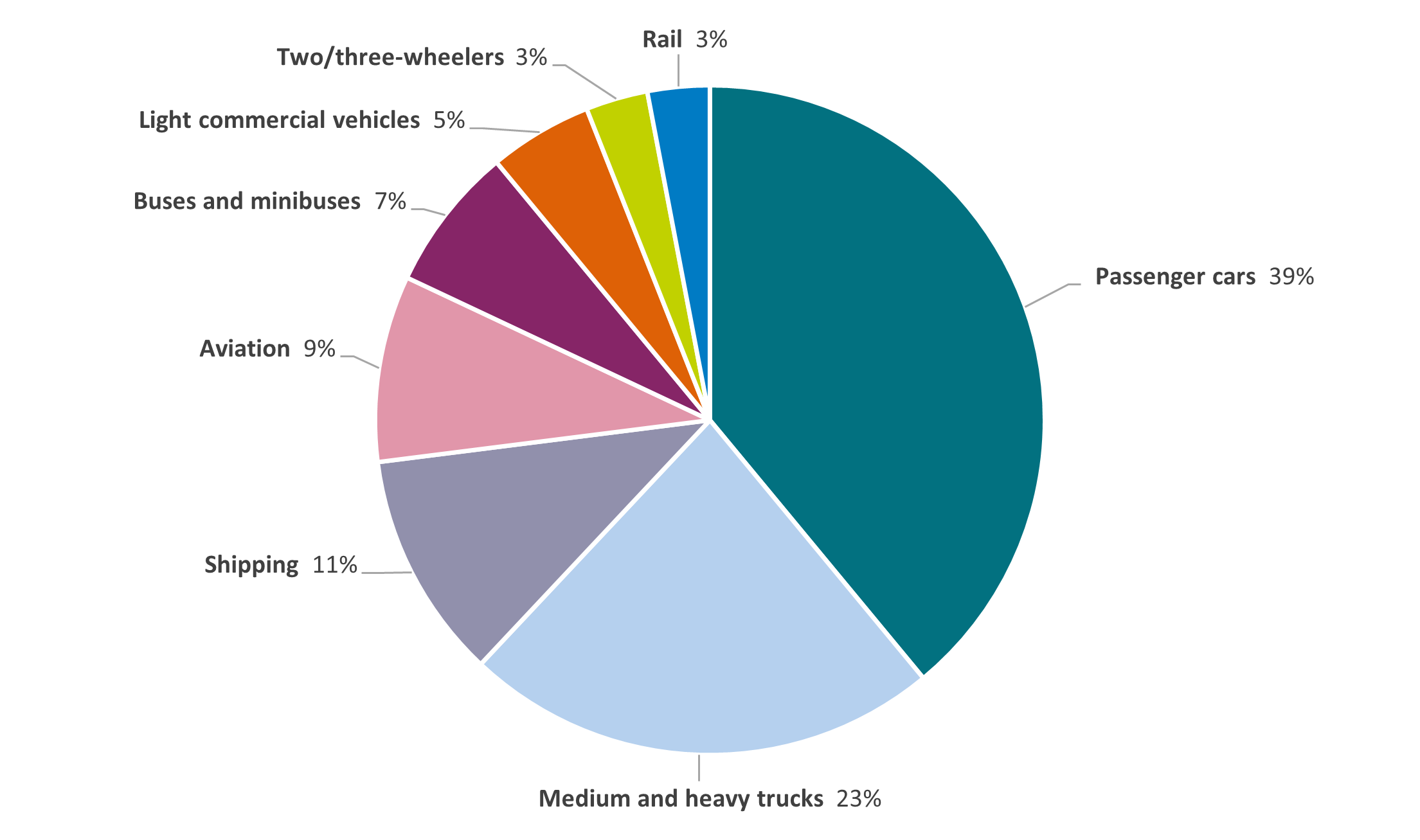
Source: Statista, based on 2021 data
Low-carbon fuels
Mile for mile, flying is the most carbon-intensive method of travel – the aviation industry is thought to be responsible for around 5% of global warming.
Many airlines have already made commitments to using sustainable aviation fuel (SAF). A biofuel with similar chemical properties to conventional aviation fuel, SAFs have potentially sharply lower greenhouse gas emissions – but are currently expensive and hard to come by.
This may change in future as the US Inflation Reduction Act includes subsidies for SAF production while the European Union is reported to be considering setting SAF usage targets from 2030 for any airline seeking to receive a green label.
Changing consumer preferences can also help shift the dial – a recent survey found that 40% of travellers were willing to pay at least 2% more for carbon-neutral flights.
Meanwhile the cruise industry is the fastest growing tourism sector and is expected to exceed pre-pandemic levels in passenger numbers and revenues by 2026.
Electric vehicles on the rise
Cars are the biggest contributor overall to transport sector emissions, at some 39%, in part due to the sheer number of vehicles on the road.
Sales of electric vehicles (EVs) are expected to rise 35% this year,
Reducing the number of cars on the roads is also another step towards lower carbon emissions. Ridesharing potentially reduces the need for car ownership, particularly in cities, and opens up a new swathe of companies for investors to consider - but a recent study suggests it is pricing that makes the difference between whether ride sharing reduces or increases emissions.
Rail travel has one of the smallest carbon footprints of transport methods,
And while artificial intelligence has had mixed press recently, there’s no doubt it can be helpful in certain areas – in transport for instance, companies are using artificial intelligence and cloud computing to deliver smarter timetables to meet changing customer demand.
Meanwhile electric trains and trams harnessing new technologies including automation can provide low carbon alternatives in cities and new urban developments. The global connected rail market is already estimated to be worth over $92bn and to reach over $143bn by 2030.
At the smaller end of the scale, we are seeing a surge in popularity of micro-mobility – electric bikes and scooters. The COVID-19 pandemic caused a spike in demand for these kinds of powered two-wheelers as an alternative to public transport.
Micro-mobility now accounts for an estimated 16% of trips globally, according to McKinsey & Company. It estimates that the market is worth around $180bn today, with the potential to more than double by 2030 to around $440bn.
Driving potential investment opportunities
The economic downturn and high inflation are likely to mean consumers are more demanding when it comes to spending their money on leisure travel – and they are increasingly aware of the environmental impact and becoming more selective about sustainability issues when travelling.
There is ongoing impetus from governments and policymakers, which we expect to only increase as they strive to meet climate targets, both in encouraging lower carbon forms of travel and granting incentives for investment in decarbonisation.
Companies everywhere are setting sustainability targets, many including emissions from business travel, which represents nearly a third of all travel spend.
As the market continues to return to, and likely exceed, pre-pandemic levels, we see scope for potential investment opportunities for those who want to play a part in the journey to sustainable travel while also seeking financial returns.
Disclaimer
BNP Paribas Group's acquisition of AXA Investment Managers was completed on 1 July 2025, and AXA Investment Managers is now part of BNP Paribas Group.
This website is published by AXA Investment Managers Australia Ltd (ABN 47 107 346 841 AFSL 273320) (“AXA IM Australia”) and is intended only for professional investors, sophisticated investors and wholesale clients as defined in the Corporations Act 2001 (Cth).
This publication is for informational purposes only and does not constitute investment research or financial analysis relating to transactions in financial instruments, nor does it constitute on the part of BNP Paribas Asset Management or its affiliated companies an offer to buy or sell any investments, products or services, and should not be considered as solicitation or investment, legal or tax advice, a recommendation for an investment strategy or a personalized recommendation to buy or sell securities.
Market commentary on the website has been prepared for general informational purposes by the authors, who are part of AXA Investment Managers. This market commentary reflects the views of the authors, and statements in it may differ from the views of others in BNP Paribas Asset Management.
Due to its simplification, this publication is partial and opinions, estimates and forecasts herein are subjective and subject to change without notice. There is no guarantee forecasts made will come to pass. Data, figures, declarations, analysis, predictions and other information in this publication is provided based on our state of knowledge at the time of creation of this publication. Whilst every care is taken, no representation or warranty (including liability towards third parties), express or implied, is made as to the accuracy, reliability or completeness of the information contained herein. Reliance upon information in this material is at the sole discretion of the recipient. This material does not contain sufficient information to support an investment decision.
All investment involves risk , including the loss of capital. The value of investments and the income from them can fluctuate and investors may not get back the amount originally invested.